Multi-model databases
- Summary
- Relatively recently emerged NoSQL and other modern database management systems allowed to deploy databases based on other logical models than just the traditional relational. Unfortunately, the number of available models, formats, implementations, and query languages the existing systems exploit, often proprietary, is not sustainable from a longer perspective. Therefore we focus on various aspects of efficient and unified management of multi-model data, including conceptual modeling, schema inference, unified querying, or evolution management.
A relatively recently emerged family of NoSQL and other modern database management systems allowed to deploy databases based on other logical models than just the traditional relational, e.g., key/value, wide column, document, or graph, to name at least some of them. More interestingly, multiple models can, in fact, be incorporated within just one system. The support for such multi-model data has become a standard for most of the existing systems, both relational as well as novel NoSQL. The so-called multi-model data is naturally organized in different, but mutually interlinked formats and models, including structured, semi-structured, and unstructured.
Unfortunately, the number of available models, formats, implementations, and query languages the existing systems exploit, often proprietary, is not sustainable from a longer perspective. Therefore, the purpose of our ongoing effort is to propose ways how processing of multi-model data could be unified and performed conceptually, pursuing a more general vision of fully automated unified databases that would no longer need to consider and distinguish different approaches at the logical layer at all. In particular, we focus on various aspects of efficient management of multi-model data, such as conceptual modeling, data transformations, schema inference, unified querying, or evolution management.
- Website of the ADAM research group, formed by several department members, contains up-to-date information about new developments on the topic
People

Jaroslav Pokorný
Professor emeritus

Irena Holubová
Associate professor

Pavel Koupil
Assistant professor
Michal Kopecký
Lecturer

Martin Svoboda
Lecturer
Latest publications
- A universal approach for simplified redundancy-aware cross-model querying (2025)
- DortDB: Bridging Query Languages for Multi-Model Data Ponds (2025)
- TransforMMer: A Universal Multi-Model Data Generator. (2025)
- MM-evoque: Query Synchronisation in Multi-Model Databases. (2024)
- Modelling and Evolution Management of Multi-Model Data (2024)
- MM-quecat: A Tool for Unified Querying of Multi-Model Data. (2023)
- Distributed Asynchronous Regular Path Queries (RPQs) on Graphs (2023)
- A universal approach for multi-model schema inference (2022)
- A unified representation and transformation of multi-model data using category theory (2022)
- MM-evocat: A tool for modelling and evolution management of multi-model data (2022)
- aDFS: An Almost Depth-First-Search Distributed Graph-Querying System (2021)
- Categorical modeling of multi-model data: one model to rule them all (2021)
- MM-cat: A tool for modeling and transformation of multi-model data using category theory (2021)
- Evolution management in multi-model databases (2021)
- Multi-model databases: a new journey to handle the variety of data (2019)
- Advanced Behavioral Analyses Using Inferred Social Networks: A Vision (2019)
- Multi-model databases and tightly integrated polystores: Current practices, comparisons, and open challenges (2018)
- Multi-model Data Management: What's New and What's Next? (2017)
Supporting software

DortDB
A modular multi-language in-memory query engine. Queries the arrays, DOM trees, and graphs already in your app's memory, in place and across languages, with no database process and no import step.
FDepHunter
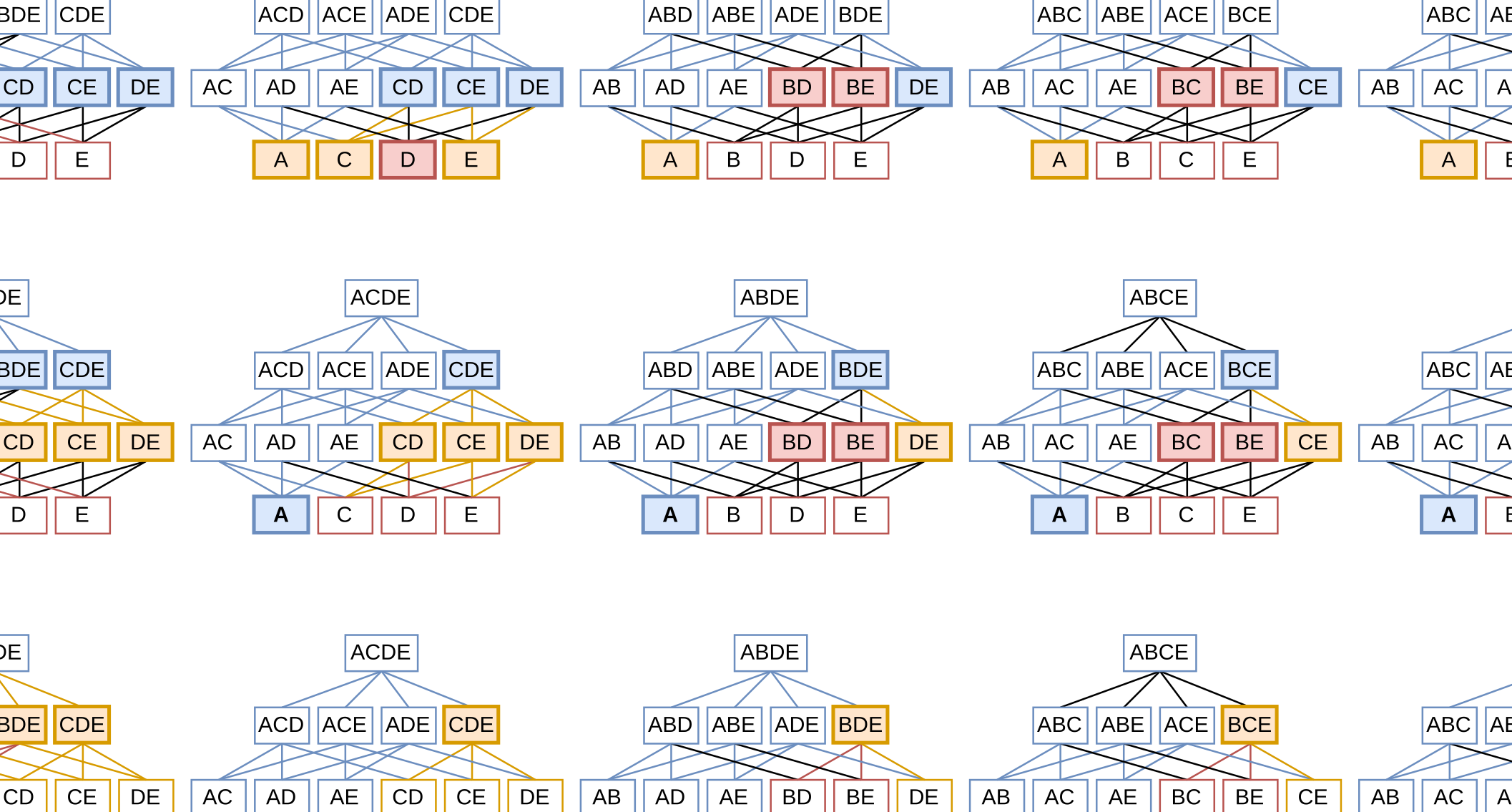
FDepHunter is a novel and interactive method for dependency discovery that augments an Armstrong relation with additional tuples. It relies on artificially generated negative examples that emulate real-world tuples to help expose fake FDs, together with domain experts to confirm that positive examples indeed reflect the characteristics of the original dataset.
MM-cat
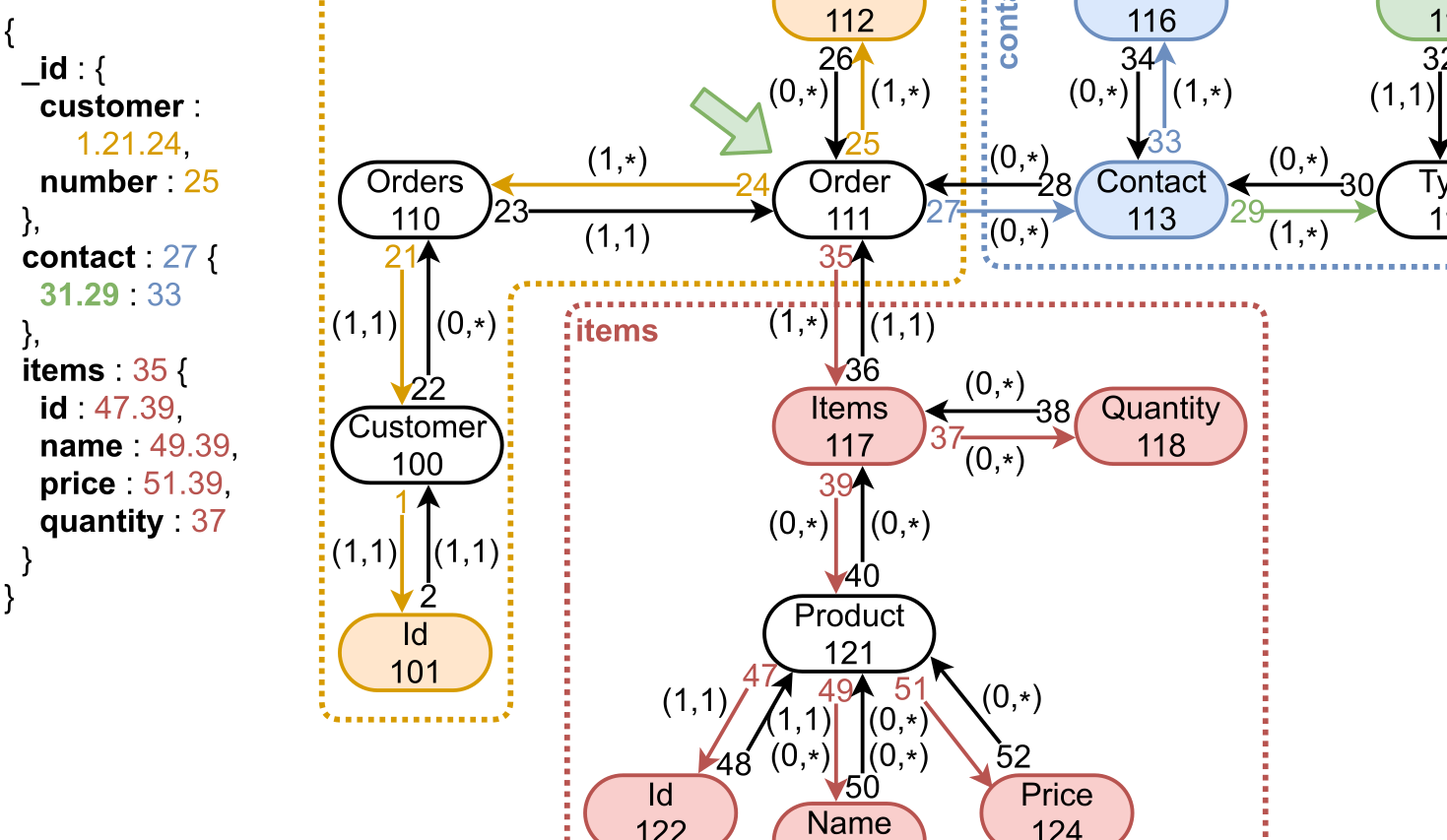
A modular and extensible framework that enables to design a multi-model schema. An initial ER schema is transformed to a unified categorical representation which can then be easily mapped to any combination of models in a particular DBMS, or their set.