
Ladislav Peška
Associate professor
Ladislav Peska mainly focuses on fields of recommender systems, user preference learning, and partially also on multimedia information retrieval.
Courses
User preferences and advanced recommending methods
NDBI021
Database Systems
NDBI025
Introduction to recommender systems and user preferences
NSWI166
Principles of Computers for Bioinformatics
NSWI178
Latest publications
- Efficient Learning of Sparse Representations from Interactions (2026)
- From Knots to Knobs: Towards Steerable Collaborative Filtering Using Sparse Autoencoders (2026)
- Towards Asynchronous Group Recommendations (2026)
- Match-it: Group Recommendations in the Age of Mobile Applications (2026)
- Evaluating Keyframe Layouts for Visual Known-Item Search in Homogeneous Collections (2026)
- SM-RS 2.0: User-perceived Qualities of Single-and Multi-Objective Recommender Systems (2026)
- Long-term fairness in sequential group recommendations (2026)
- CALISSTA: Calibrated Candidate Retrieval Using Sparse Autoencoders and Top-k Aggregation (2026)
- GMAP 2026: 5th Workshop on Group Modeling, Adaptation and Personalization (2026)
- VISAnt: Unsupervised Data Exploration with Chernoff Faces (2025)
- It's Time to Let Go: Stopping Criteria Recommendations in Content-rich Domains (2025)
- Unified visual-aware representations for data analytics (2025)
- Bridging the Rift: A Critical Perspective on the Divergence in Group Recommender Systems Research (2025)
- SAGEA: Sparse Autoencoder-based Group Embeddings Aggregation for Fairness-Preserving Group Recommendations (2025)
- How Do Users Perceive Recommender Systems’ Objectives? (2025)
- Effects of quantitative explanations on fairness perception in group recommender systems (2025)
- Accuracy and beyond-accuracy perspectives of controllable multi-objective recommender systems (2025)
- GMAP 2025: 4th Workshop on Group Modeling, Adaptation and Personalization (2025)
- RESET: Relational Similarity Extension for V3C1 Video Dataset (2024)
- On interpretability of linear autoencoders (2024)
Maintainer of
Compresso
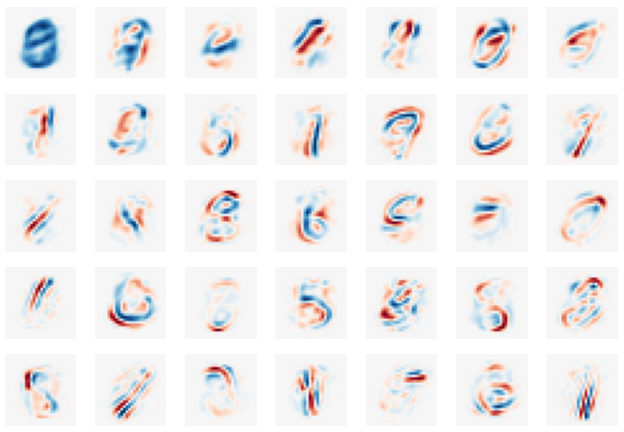
Compresso is an open-source PyTorch framework for sparse representation learning. It provides reusable building blocks for learning sparse neural representations, dynamic sparsification, sparse inference, and semantic analysis, enabling researchers to rapidly prototype sparse neural architectures while focusing on models rather than infrastructure.
EasyStudy
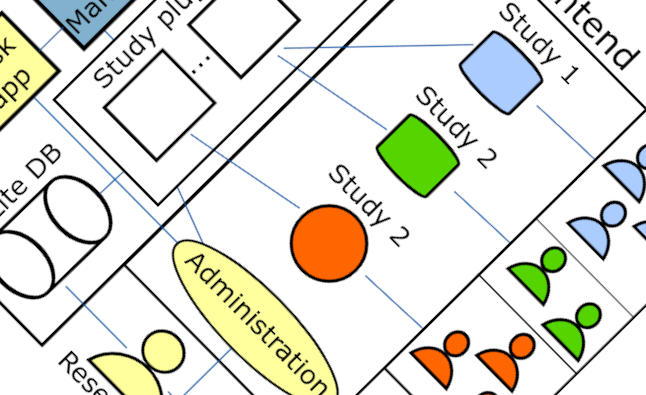
EasyStudy is an open-source framework for interactive user studies, including recommender systems, HCI, and generally any item-based experiments. The software includes many interesting algorithms and testing datasets.

GroupRec
GroupRec is a unified toolkit for reproducible and inspectable group recommendation research.
Research topics
Multimedia Retrieval
Multimedia data penetrate all areas of our lives and become more important than ever. We meet them in social media applications, video streaming services, digital libraries as well as in specialized medical or industrial fields. As multimedia data are produced using sensors, their primary representation is semantically unstructured (e.g., an image is a bunch of pixels). Hence, recognition of what actually is inside a particular multimedia document and subsequent retrieval is a hard task that requires advanced techniques for feature extraction, object detection, similarity modeling, etc. Many of these techniques are based on machine-learning models. We carry out research in various multimedia retrieval problems and also propose many topics for student academic works (Bc, Mgr, PhD).
Recommender systems
Software that estimates, models and evaluates user preferences and needs, producing viable recommendations of items such as multimedia or goods that would match user interests.